
Australia banned social media for users under 16 in 2025. On the other side of the world, France, Greece and Spain are now also weighing social media bans for teenagers in the name of online safety. But is age-restricted access to social media the best solution to address the complexities of today’s parenting and teenagers’ mental health?
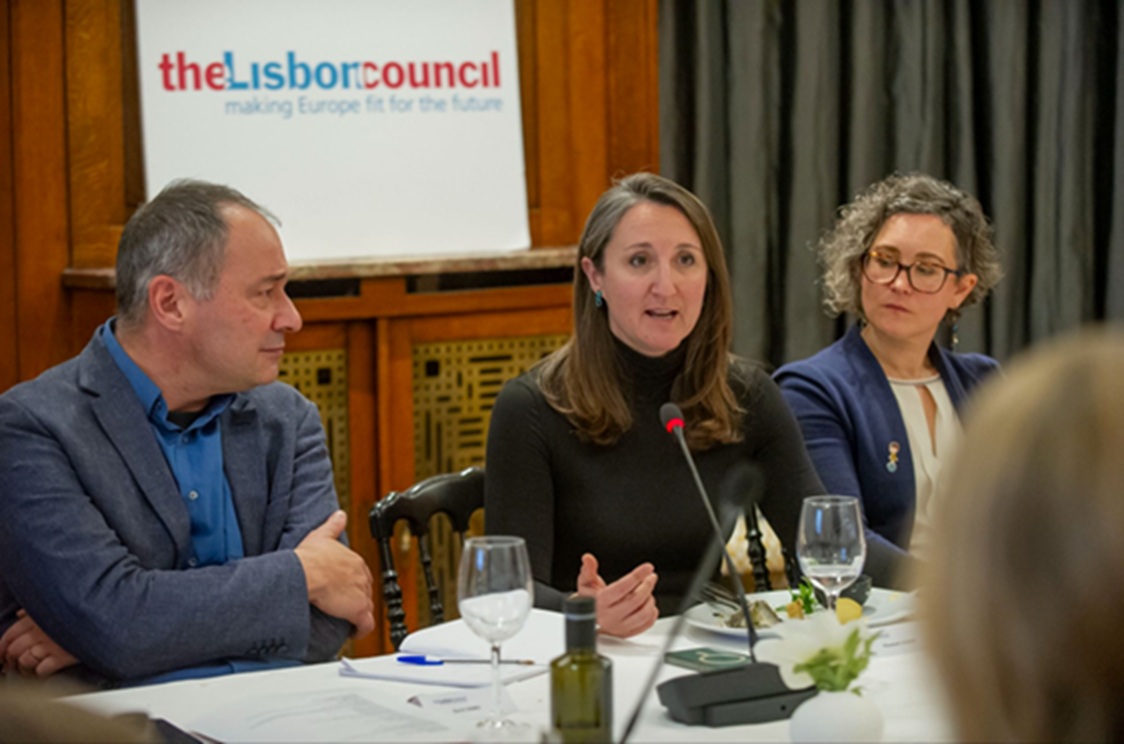
The Lisbon Council (ThinkTank working on the European Union Lisbon Treaty) convened a High-Level Working Lunch “To Ban or Not To Ban: What Scientific Evidence and Practice Teach Us on Kids and Social Media”, bringing together international experts, policymakers and children’s online safety advocates to look behind the headlines.
Professor Amanda Third, co-director of the Young and Resilient Research Centre at Western Sydney University, faculty associate at the Berkman Klein Centre for Internet and Society at Harvard University and member of the advisory board for the implementation of the social media ban, opened the discussion with the first insights into the Australian case. Looking at the data, risks emerge. First, platforms that no longer expect to host children may scale back safety-by-design efforts. Second, a privacy paradox could take shape, where mandatory age checks, often relying on behavioural profiling, are imposed on all users. Leslie Miller, vice president, public policy at YouTube, shared how the platform is addressing these challenges and stressed the importance of having conversations outside Silicon Valley.
A holistic approach was favoured by the group to move beyond blunt access bans, including targeting harmful features and other measures that provide children with a safer online experience. High-level speakers included Leanda Barrington-Leach, executive director, 5Rights Foundation; Francesca Centola, policy and advocacy advisor, Save the Children; Jutta Croll, chairwoman and board member, Digital Opportunities Foundation (Germany), and member, safety advisory board, Snap Inc.; Simeon de Brouwer, digital policy assistant, European Digital Rights (EDRi); Elina Eickstädt, hacker and spokesperson, Chaos Computer Club and V. (CCC); Elizabeth Gosme (she/her), director, COFACE Families Europe; Martin Harris Hess, head of sector for protection of minors, directorate-general for communications networks, content and technology, European Commission; Francesca Pisanu, European Union advocacy officer, eurochild; Sole Pera, associate professor in the web information system group, Delft University of Technology (TU Delft); and Andrea Tognoni, case handler, directorate-general for communications networks, content and technology, European Commission.
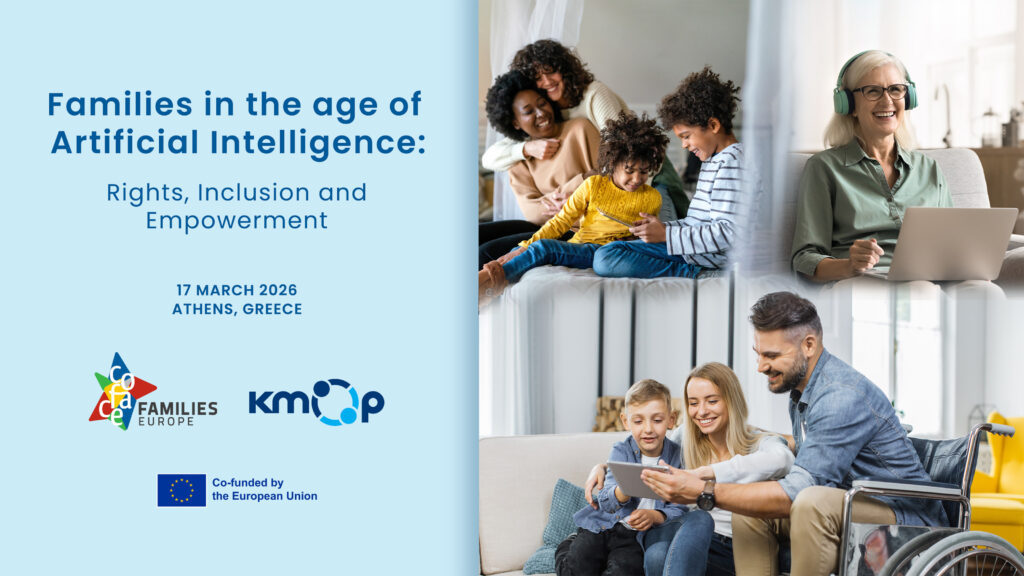
Elizabeth Gosme mentioned that COFACE member organisations were very heavily engaged in discussions on safer internet in 2025 through the EU consultations, the implementation of the Better Internet for Kids strategy, and through a host of internal COFACE meetings. These internal meetings will continue this year with a big meet-up next month in Athens on Artificial intelligence and its impact on family life, as well as further discussions on bans during its safer internet working gorup meeting.
She highlighted that member organisations are currently heavily debating bans in their respective countries, and their positions vary and are developed based on a number of factors including how early children start using technology, the increasing reports of online child sexual abuse, approaches to parenting, first research emerging on mental health and digital technologies (even if patchy and incomplete according to the Belgian Superior Health Council), evidence of how algorithms are being developed using the wealth of psychological research on how to addict people (considered unacceptable), and finally also the first evaluations of smartphone bans in schools.
Many families the COFACE community still believe that banning is a strategy which has its limits. First, they believe that blanket bans are extreme, and prefer referring to disconnection during specific moments of the day (e.g. during school lessons) or the year (e.g. during out-of-school camps). Second, they highlight that social media bans would only postpone the problem: yes children can revert to traditional means of communication (purely through phones and learning the theory about digital spaces), but what will happen at 16 if teenagers have never learned to evolve gradually and in an accompanied way in these digital spaces? Third, they find it difficult to fit bans into the logic of children’s rights, which aim to support the gradual acquisition of autonomy, including in digital environments. Banning means that parents cannot fully do their job of giving children basic/first education about the use of digital technologies. Finally, the approach of banning also reflects an admission of failure: that of failing to impose on platforms and digital service providers the obligation to protect children, to integrate the well-being of minors into the very design of tools, and to offer modulated and age-appropriate environments.
See more about the Lisbon Council Round Table here