
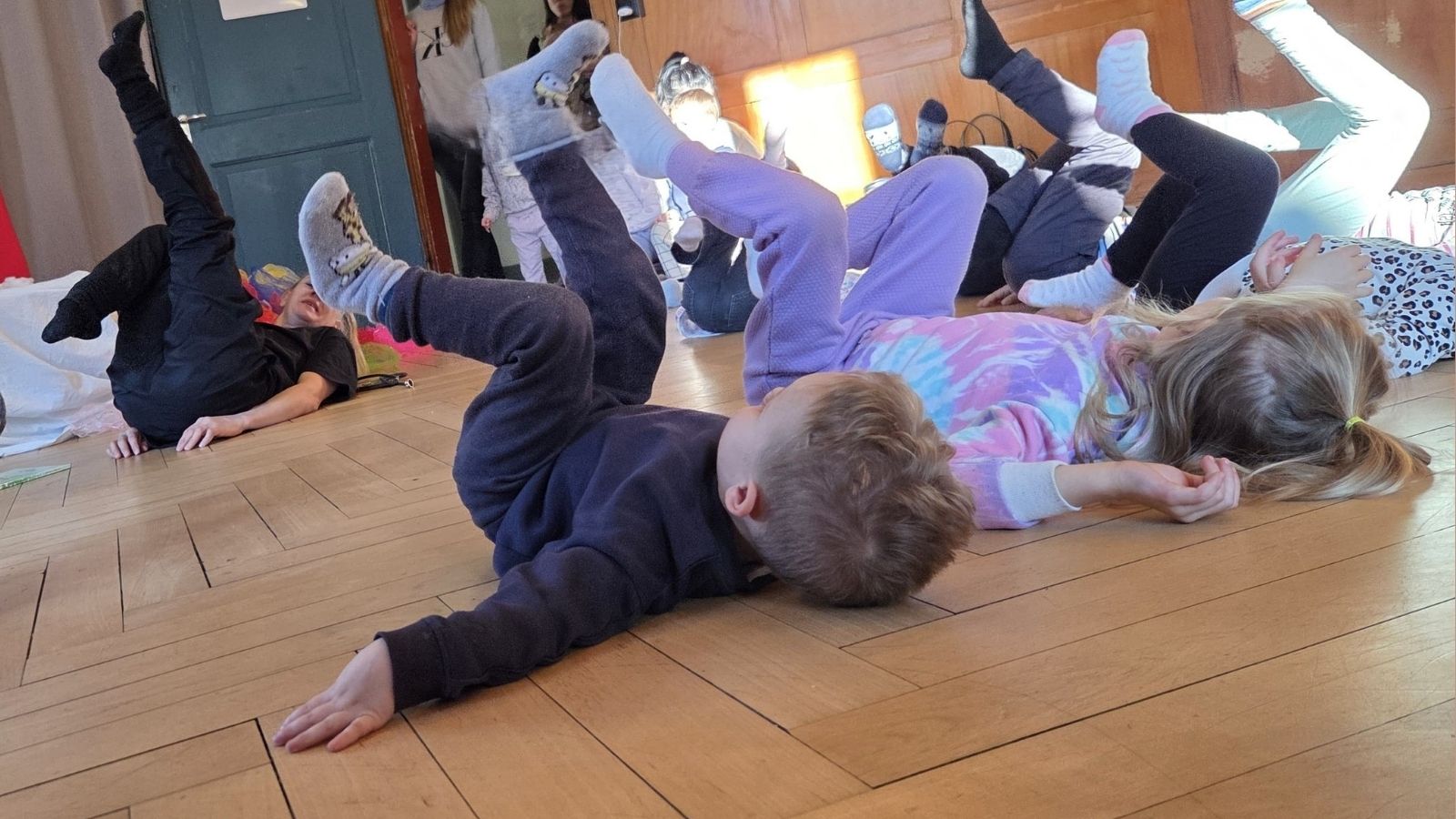
“Movement is not just about health; it’s a fundamental right for every person to explore their environment and develop their potential,” says Jasmin Ecknauer, founder of the Swiss-based organisation Bewegungsvorschule Bewegigshüsli® (Little Movement House).
We are delighted to welcome Bewegigshüsli to the COFACE network. Since 2018, their mission has been to create movement-friendly learning environments that foster inclusion and social equity. While the foundation of their work lies in the early years sector (ages 0-4), they has expanded their vision to offer intergenerational movement programmes for everyone from age 4 to 99.
The Bewegungsvorschule Bewegigshüsli Approach:
- “Where children learn through fun and movement”: Bridging pedagogical expertise with practical experience to strengthen motor, cognitive, and social skills (the “4C” competencies).
- Inclusion for All: Creating open and accessible spaces where every individual, regardless of their physical or social background, is actively included.
- Sustainability: Providing intensive training for local staff to ensure movement becomes a permanent part of community and educational life.
“By joining COFACE, I look forward to exchanging ideas on child-friendly urban planning and inclusive health promotion across Europe,” Jasmin adds.
For more information, visit: www.bewegigshuesli.ch