
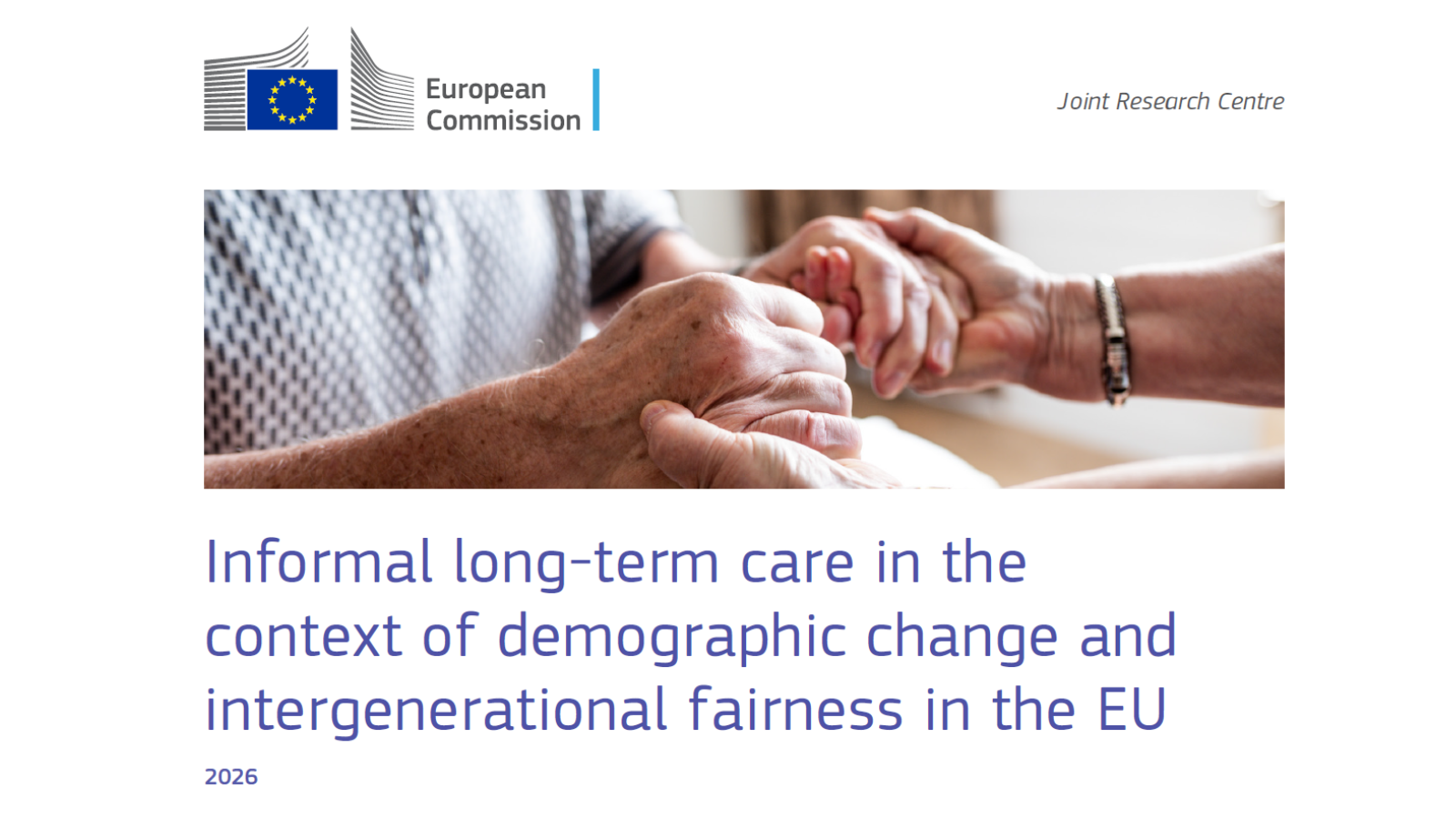
A new study by the Joint Research Centre (JRC) of the European Commission explores the link between informal long-term care, demographic change and intergenerational fairness.
Europe is facing a significant demographic change. People are living longer, while fewer children are being born. As a result, the population is ageing rapidly. At the same time, informal care, for example provided by a family member, continues to play a key role in long-term care systems across the EU.
However, these demographic trends are creating new scenarios on how care is given and received. On the one hand, the demand for long-term care is increasing as the population ages. On the other hand, the availability of people able to provide informal care is decreasing.
The research has shown that younger generations will likely provide more care but receive less, and this imbalance risks affecting both caregivers and older people, increasing pressure on families and placing additional pressure on families.
These findings highlight the need to rethink how long-term care systems are organised in Europe, with a stronger focus on achieving intergenerational fairness.
This means, for example, expanding and diversifying formal care services and ensuring better integration with informal care. In parallel, labour market policies should better support people in balancing paid work and caregiving responsibilities.
The study also points to the importance of strengthening a person-centred approach to care. Care systems should be designed around people’s needs, ensuring that support is accessible, coordinated and adapted over time, as care needs evolve with changes in age, health, family and social circumstances.