
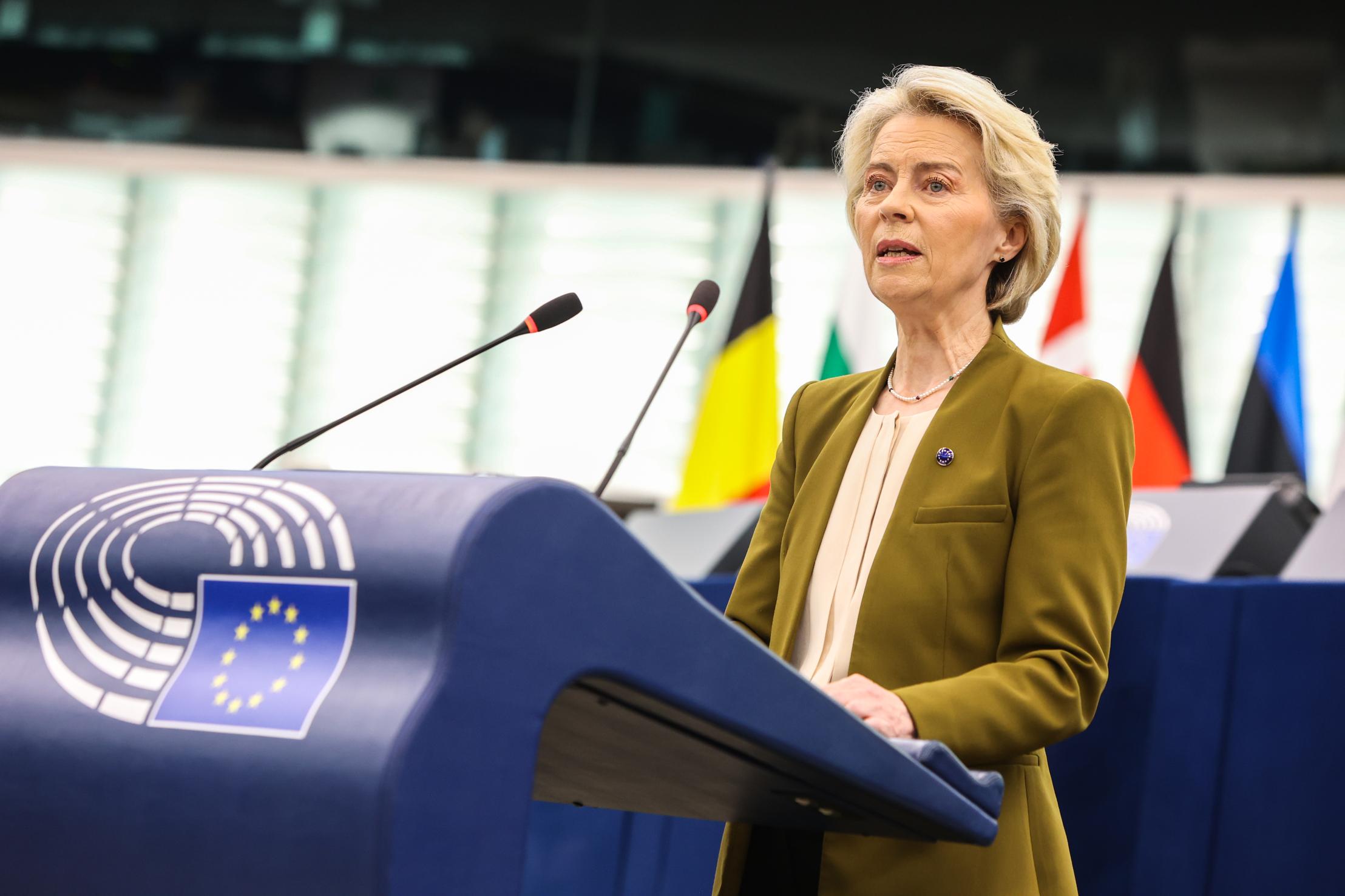
In September each year, the President of the European Commission delivers the State of the Union address to the European Parliament. This is an opportunity to share her vision for the EU, take stock of achievements and to announce major upcoming initiatives. This year, she highlighted a number of initiatives and trends which are highly relevant for the COFACE Families Europe network.
Measures to prevent and tackle poverty
In her speech, the President acknowledges the suffering of millions of citizens linked to rising living costs. “This is why we urgently need an ambitious European Anti-Poverty Strategy. We will lay out our plan to help eradicate poverty by 2050. Backed up by a strong Child Guarantee to shield our children from poverty.” COFACE welcomes these priorities and stands ready to work with the European Commission to fully implement the Child Guarantee, and develop a European Anti-Poverty Strategy which aims to dismantle silos and foster multi-sectoral coordination to address the multidimensional nature of poverty.
Impact of social media on families
Von der Leyen raises the challenge and potentially negative effects of “giving our children unfettered access to social media”. She referred to her own personal experience as mother of seven, and a grandmother of four: “I feel the anxiety of parents who are doing their best to keep their children safe. These parents worry that when their children pick up a phone they could be exposed to the wide-ranging dangers, simply with a scroll.” She highlighted challenges such as online bullying, adult content, promoting self-harm.
She also alluded to the role of the ICT industry in this respect, pointing to algorithms that prey on children’s vulnerabilities with the explicit purpose of creating addictions. “Too often mums and dads feel powerless and helpless. That they are drowning against the tsunami of Big Tech flooding their family homes. I strongly believe that parents, not algorithms, should be raising our children. Their voice must be heard. This is why today I am here to tell you that I am listening. Just as in my days – we as a society – taught our children that they could not smoke, drink and watch adult content until a certain age. I believe it is time we consider doing the same for social media.”
Von der Leyen is looking at actions taken in other world regions like Australia, mentioning that she will commission a panel of experts to advise her by the end of this year on the best approach for Europe. “And in all of this work we will be guided by the need to empower parents and build a safer Europe for our children. Because when it comes to our kids’ safety online, Europe believes in parents, not profits.”
COFACE stands ready to work with the von der Leyen Commission
COFACE is working tirelessly to support the implementation of the European Pillar of Social Rights, in a wide range of fields such as childcare, work-life balance, access to essential services, inclusion of persons with disabilities, long-term care and more. This also includes creating synergies between the Pillar and EU-level initiatives in the digital field such as the Digital Services Act and the Better Internet for Kids Strategy.
Antonia Torrens, COFACE president: “We welcome the ambitions of President von der Leyen to empower parents and children, and we feel listened to. COFACE has worked for 15+ years on monitoring and shaping EU policies for a safer internet, and we are available to bring our experience to the panel of experts to make sure the voice of parents and carers is fully heard. There are many challenges and nuances in this debate (including the definition of social media, the diverse characteristics of children and the circumstances in which they grow up, as well as the opportunities that digital technologies bring), and as many solutions possible. We are convinced that a solution can be found which is both in line with the UN Convention on the Rights of the Child, and which can be a great support to families, while allowing for each Member State to find solutions tailored to their regional and local realities. This especially goes through further holding the ICT industry accountable for its crucial role in making their products child-friendly. If these products are not designed with children in mind, then children should not be using them. However, our aim should be to create a digital environment in which children can participate safely and benefit from the opportunities it brings”.
You can download the speech in all EU languages here.