
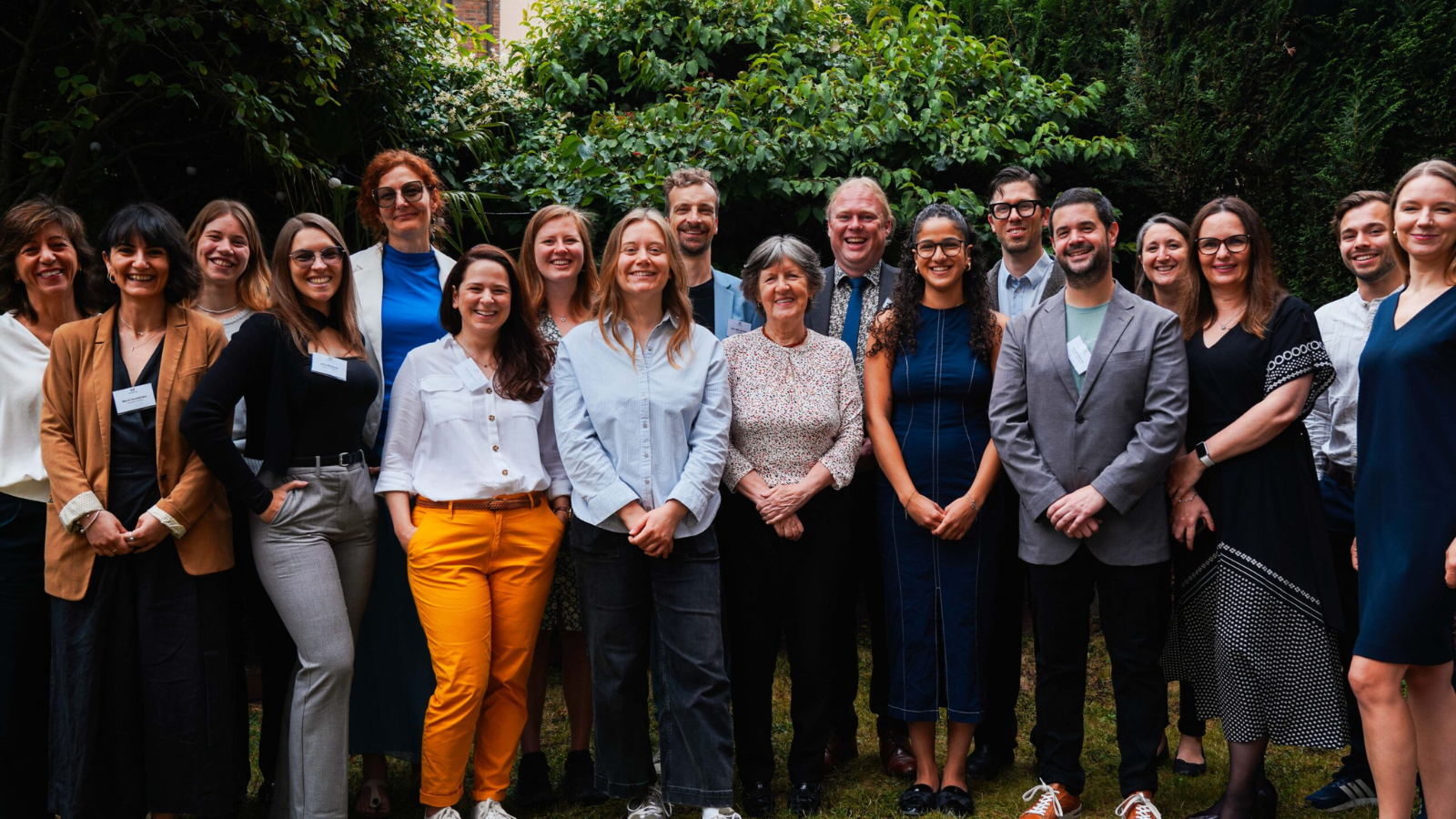
Since 2022, COFACE has been working in a consortium of 7 partners across 6 European countries on the rEUsilience project funded by the EU’s Horizon Europe programme and Innovate UK.
The rEUsilience project has taken a deep dive into family life, studying not only how families operate but, more importantly, how they cope with the many challenges they face. They go through transitions of work and care, family life is far from static. Using a range of methodologies, including focus groups and analyses of large data sets, the researchers identified several important limitations to families’ capacities for resilience.
As the three years exploring family resilience comes to an end, we take a look back at what we have achieved in our research and policy work, and our readiness to continue to drive policy change and improvements that will help real families in real life:
We must see families beyond households, in their different forms and in all their diversity.
Crucial research highlighted that European social surveys struggle to identify family relationships, obstructing how we can observe the care relations in and between households. This means that family types such as multi-generational households, single parent families, and blended families can be hidden from our view which of course has implications for policy interventions (or the lack of) to support these families. rEUsilience developed the ‘Families in Households Typology’ (see here in Community, Work & Family Journal) to propose a new way at identifying families in and between households, helping us to better see all families in their diversity.
Groups with the greatest need for resilience against labour market risks have the least capacity to avoid poverty.
rEUsilience research shows that those most exposed to labour market risks, such as single parents and lower-educated individuals, are also those with the least resources to be resilient, reflecting a double disadvantage (see here). When looking at adaptive strategies families would use if they had the resources they need, rEUsilience research shows that earlier decisions regarding the division of labour within households often persists. For example, in traditional breadwinner households, adaptive responses to men’s unemployment (such as increased employment for women or working additional hours), remained rare (see here in PLOS One journal). rEUsilience focus groups with 300 families across Europe showed that families in Europe face multiple, intersecting or ‘compounded’ risks such as financial scarcity, time scarcity and scarcity of secure paid work, often due to care responsibilities (see here in the rEUsilience book). Because many families juggle care, work, and resources, this oftentimes creates substantial trade-offs where caring for children and adults is at the centre and which means that these families rarely have ‘optimal’ choices available to them. Rather, they seek to navigate this ‘care trilemma’, meaning that making a choice in one sphere often leads to deprivation in another.
rEUsilience Policy Lab
rEUsilience set up an innovative Policy Lab where many COFACE members, policymakers, social partners and analysts came together to road test policy solutions to support families. Together policy lab panellists and rEUsilience researchers developed crucial policy advice regarding ensuring better income support for families with children, with a particular concern for low-resourced families, closing the childcare gap, and putting in place a comprehensive network of family support services. This was complemented with a set of 15 policy principles covering issues of policy coverage (endorsing a universal approach), adequacy (in terms of the amount and sufficiency of benefits or leaves), inclusion (recognition of family diversity and needs), and the absence of gaps in and between policies. (Read more here). The last output of the Policy Lab is a ‘Roadmap for boosting the rights and resilience of European families’ (soon to be published) which lays out key recommendations and identifies the conditions for their implementation. The recommendations centre on rolling out peer exchanges on family support through the European Child Guarantee, promoting social investments for family resilience and strengthening support services for families under the European Social Fund +, and improving data infrastructure and monitoring of families and care relations.
rEUsilience Final Conference
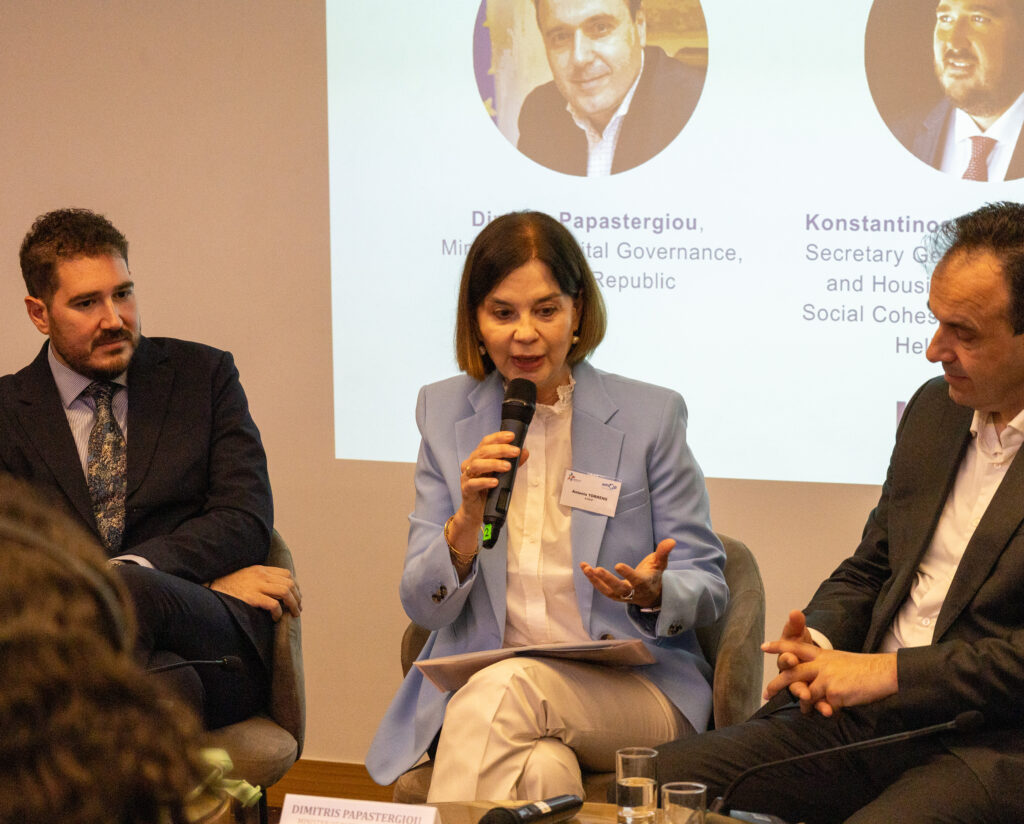
We were pleased to see many COFACE members and partners at our final conference which took place on Friday 27th June 2025 in Brussels on the topic of ‘The State of Family Resilience in Europe Today: new evidence to support policy reform’. For those who could not join us or wish to refer back to the materials, we have a fully packed resource page here.