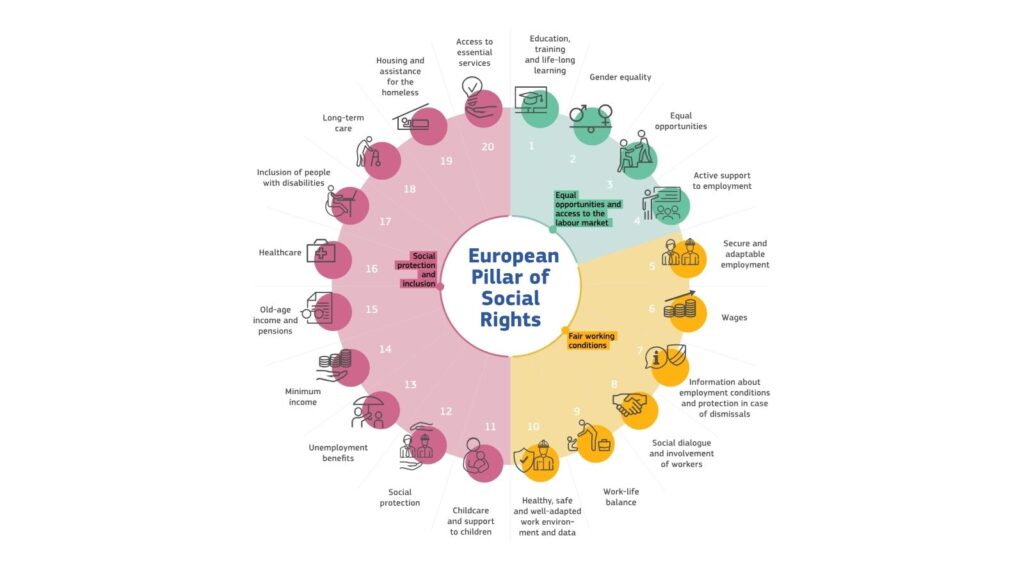

The European Commission has launched a first-stage consultation with European social partners on possible new EU action to help people who face significant barriers to entering or returning to the labour market. The initiative, announced as part of the Commission’s renewed commitment to the European Pillar of Social Rights, seeks to explore how European and national policies can better identify people who remain outside the labour market, reach those who are not currently receiving support and create more effective pathways into employment. The activation initiative forms part of a wider European strategy to reduce poverty and social exclusion.
__________
In the consultation document, the Commission indicates that significant talent remains untapped across Europe. Helping people move from economic inactivity into employment is seen not only as a question of social inclusion, but also as an important factor in addressing poverty, strengthening competitiveness and expanding Europe’s available workforce.
The proposed initiative would focus on people who are excluded from the labour market or face substantial obstacles to participating in it. Rather than relying solely on existing employment services, the Commission is considering approaches that could improve the identification and outreach of people who are currently disconnected from employment support. A key element under consideration is the development of individualised pathways towards labour market integration. This could involve closer cooperation between employment services, social services and other relevant authorities so that people receive support adapted to their individual circumstances.
The approach would also consider equality between women and men in access to labour market opportunities, making gender equality part of the consultation alongside broader labour market inclusion. The consultation document explicitly mentions target groups including “women, and those with caring responsibilities in particular, continue to represent a disproportionate share of those outside the labour market.” It also refers to “dedicated measures for parents” and that “EU action could contribute to ensuring that job-seeking parents and working parents, from the end of their childbirth-related leave until the start of compulsory education, are provided with access to an ECEC place or, where this is not immediately possible, with a temporary alternative arrangement of equivalent quality, reliability and accessibility until an ECEC place becomes available.”
The consultation is being conducted under Article 154 of the Treaty on the Functioning of the European Union, which requires the Commission to consult European social partners on certain initiatives in the field of employment and social policy. The first stage focuses on the possible direction of EU action. A second-stage consultation, if pursued, would examine the potential content of an initiative. This process gives employers’ organisations and trade unions an opportunity to influence the development of European social policy before the Commission decides whether further EU action is appropriate.
The consultation therefore represents an early step rather than a final legislative proposal. The Commission will take the views of the social partners into account when considering the next steps.