


30+ participants from 15 European countries came together online on 15th September 2026 to strengthen cooperation, share experiences and put single parent families higher on the European policy agenda. This included also the participation of EnoS – European network of single parent families.
____________________
Single parent families are diverse, resilient and too often overlooked in policymaking. From access to affordable childcare and housing to employment, education and social protection, single parents face many of the same challenges as other families — but often with fewer resources and less room to absorb shocks. To bring these realities more clearly into the European family policy debate, COFACE organised a Single Parent Families Working Group, bringing together organisations and experts from across Europe.
A diverse European community
The meeting highlighted the diversity of single parent families and the different pathways that can lead to single parenthood – including separation and divorce, the death of a partner, adoption and single parenthood by choice. Participants also stressed the importance of taking an intersectional and pluralistic approach. The experiences of a single parent raising a child with a disability, for example, can be very different from those of a single parent experiencing migration, language barriers or discrimination. This is why stronger connections with organisations working on disability, migration and other aspects of family diversity will be important for the working group’s future.
The challenges single parents face across Europe
Despite very different national contexts, participants identified a striking number of common challenges. Affordable childcare remains a major concern. When one parent carries most or all of the responsibility for a household, limited access to affordable and flexible early childhood education and care can become a major barrier to employment and social participation. Participants also highlighted work-life imbalance and the need for workplace flexibility, as well as particular challenges for self-employed parents and those trying to return to work after the birth of a child. Housing affordability was another recurring issue. Rising or unaffordable housing costs can place disproportionate pressure on single-income households. Participants called for policymakers to look not only at good practices but also at policies that fail families and the need to highlight bad practices. The discussions also touched on poverty, social spending and access to essential services. Where education and healthcare systems are under pressure, single parent households can feel the impact particularly strongly. Gender inequality remains particularly visible. Participants noted that single mothers can experience significantly more discrimination than single fathers, with the gender gap particularly evident in some national contexts.
Children must remain at the centre
A key message emerging from the discussions was that policies for single parent families cannot focus only on parents. The wellbeing and rights of children must be central. Children in single parent households can face increased risks of poverty and exclusion, while difficulties in accessing childcare, education, healthcare and housing can have long-term consequences. Participants also raised concerns around domestic violence and parental alienation, emphasising the need for family policies and support systems that recognise the complex circumstances in which families may find themselves. The situation can be even more challenging for families with children with special needs. Exclusionary practices in early childhood education and care and in schools can create additional barriers for both children and parents.
Connecting the debate with European policy
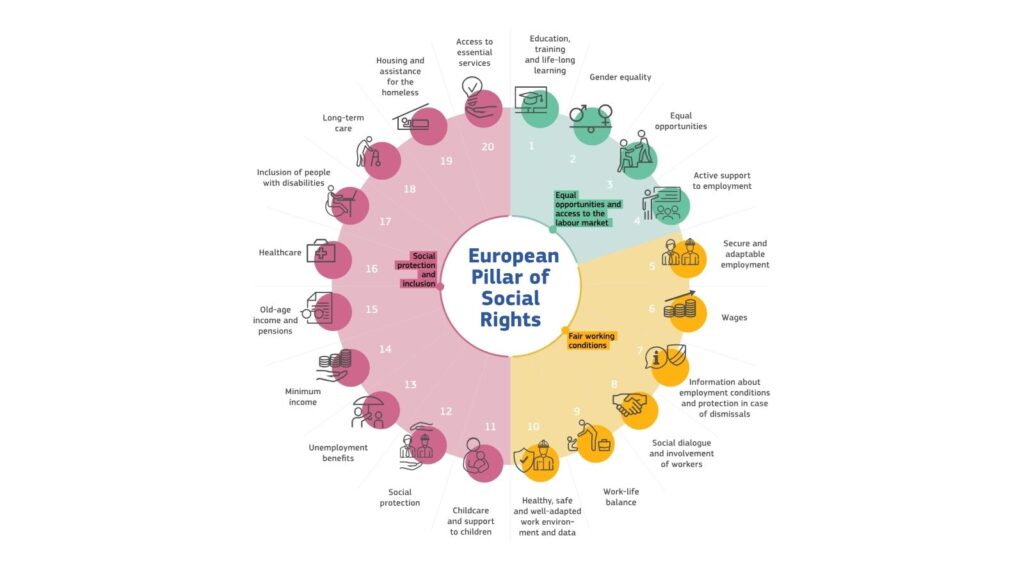
The working group also looked at how the challenges faced by single parent families connect to ongoing and future EU initiatives. The European Child Guarantee, particularly its focus on children at risk of poverty and access to early childhood education and care, provides an important framework. The wider education agenda and disability rights agendas, including work on inclusive education, are equally relevant. Participants also identified the importance of monitoring current and future EU legislation, including the Work-Life Balance Directive, initiatives on affordable housing and potential legislation related to activation and employment for people in vulnerable situations.
For further information, see more here.