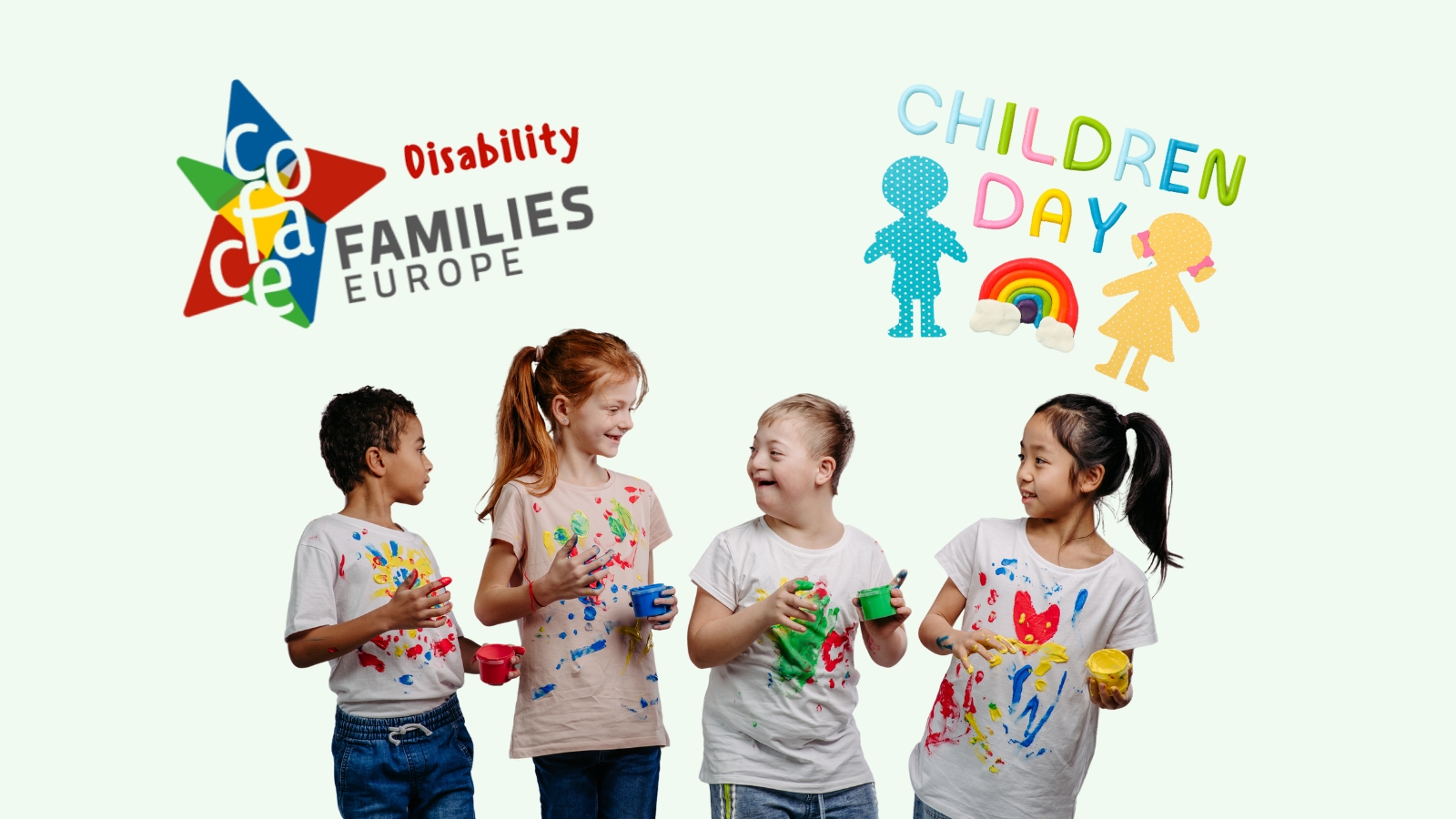
COFACE Families Europe organised a European expert meeting on 18th November in Valletta (Malta) with the support of the Ministry for Social Policy and the Family, the Ministry for Inclusion and the Voluntary Sector, and the National Parents’ Society for Persons with Disabilities in Malta. The meeting brought together experts from the COFACE network, as well as key partners in academia and public policy, to examine progress and identify remaining gaps in the implementation of the Child Guarantee. The discussions highlighted the need to ensure that children with disabilities are fully included across all areas covered by the Child Guarantee, and that the specific challenges and barriers they face in accessing all essential services are effectively addressed.
____________
COFACE Families Europe is an active supporter of the European Child Guarantee. With nearly one in four children in Europe at risk of poverty or social exclusion, and children with disabilities facing additional barriers and risks in accessing essential services and support, the European Child Guarantee remains more relevant and necessary than ever. COFACE is committed to continue supporting its implementation through various tools and channels: expert meetings, policy work and analysis, research on integrated family support models, and organising annual peer exchanges between national family ministries to share experiences and support the continuous improvement of policy development.
In addition, since 1998, COFACE established a specific platform, COFACE Disability, to better advocate for the rights of persons with disabilities, their families, and family carers. The platform primarily represents family carers of children with disabilities, and it closely monitors the rights of children with disabilities and their families (driven by the UNCRPD), through the Child Guarantee as well as other EU frameworks on disability, care and inclusive education. Key areas of focus include recognition and support to family carers, promoting inclusive education models, supporting work-life balance of parents and carers, and ensuring that local services for families are fully inclusive of families with disabilities.
The Child Guarantee holds much potential to ensure better access to key services for children with disabilities who are at risk of poverty and social exclusion, acting as an important catalyst for local experimentation and policy innovation. However, too often children with disabilities remain invisible in Child Guarantee national action plans, with measures often narrowly focused on inclusive education. The European Commission communication adopted in May 2026 for a new strengthened Child Guarantee is an opportunity to step up efforts to end the cycle of child poverty, while ensuring that new implementation efforts are fully inclusive and responsive to the specific barriers and challenges children with disabilities and their families face in accessing all essential services.
Recommendations
COFACE Families Europe calls for:
1. Specific recommendations and EU supported mutual learning opportunities for Member States on effective measures to support children with disabilities and their families in accessing their rights under the Child Guarantee across all essential services, with a specific focus on support to single parent families bringing up children with disabilities.
2. Family support measures focusing on work-life balance, access to care services, and flexible working arrangements, must be fully inclusive of parents and carers of people with disabilities. This should be an essential part of the assessment of the transposition of the EU Work-life balance directive.
3. Any digital transformation of public services, including the proposed Child Guarantee Card, must be accessible, privacy-preserving and non-discriminatory for children with disabilities and their families. Accessible non-digital alternatives should remain available for families.
4. Policies developed in the framework of the EU Strategy for the rights of Persons with Disabilities should be fully inclusive of the needs of children with disabilities and their families, recognising that families are the first and main source of care for children with disabilities before they reach adulthood.
5. Integrated and interconnected service networks built around single access points, linking leave entitlements, the right to request flexible working arrangements, and local care services. Because family needs are interconnected, public agencies and support systems must actively collaborate to deliver seamless, multi-disciplinary support through coordinated entry points.
Notes to editor
COFACE (2019), S.H.I.F.T. Guide to Shift towards meaningful inclusion of persons with disabilities and their families
Council (2021), Recommendation establishing a European Child Guarantee
COFACE (2023), Assessment of the European Child Guarantee National Action Plans from the perspective of children with disabilities and their families
Commission (2026), Breaking the cycle of child poverty: Communication on Strengthening the European Child Guarantee
COFACE (2026), European Expert Meeting on Implementing the European Child Guarantee for Children with Disabilities
COFACE Families Europe is a European network of civil society associations representing the interests of families (all types, without discrimination).
COFACE’s areas of work include social/family policy, education, disability, gender equality, migration, consumer issues, and also protection of children online, privacy, data protection, and reflections on technological developments and how they may impact families. More: www.coface-eu.org
For more information, please contact
Elizabeth Gosme, Director:
lgosme@coface-eu.org.