


The impact of Europe on financial inclusion of families: Achievements, challenges, and future directions
December 2025
Financial inclusion generally refers to everyone’s ability to access and use essential financial services (such as banking, credit, payments, insurance, and savings) that are affordable and meet their needs. It is a cornerstone for full participation in modern society. For families, financial inclusion means having a basic bank account to receive income and pay bills, the ability to obtain fair credit, insure against life’s risks, and safely save for the future. Without these services, families struggle to lead a normal social life, to be included in society. Financial exclusion is especially damaging for households with children or other dependents, because it affects the entire household’s stability. COFACE-Families Europe emphasises that access to basic financial services should be treated as a fundamental right (derived from human rights) since without it, individuals are effectively barred from full social and economic participation. In short, financial inclusion is not an end in itself; it is a precondition to achieve family well-being and social inclusion.
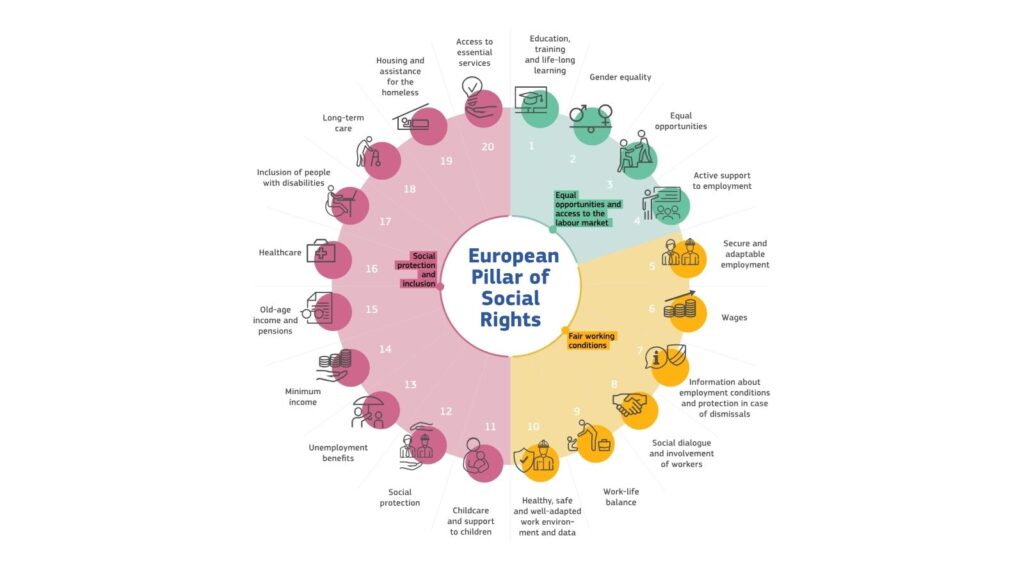
Beyond access, quality and usage are key. Services must be appropriate to families’ needs and not lead to harm. For example, credit should help families invest (such as in housing or education) but not become a debt trap that undermines their quality of life. An inclusive financial system empowers families to budget, absorb shocks, and plan for goals like children’s futures. This is vital for families in vulnerable situations (single parents, low-income households, families with disabilities) who often have more precarious finances. In the EU, over-indebtedness is highly skewed toward vulnerable groups: for instance, 41% of over-indebted households are single-parent families and 76% live on low incomes. Financial inclusion, coupled with consumer protection, can shield such families from exploitation and hardship. COFACE-Families Europe stresses that promoting financial inclusion is integral to reducing poverty and upholding the European Pillar of Social Rights, which declares access to essential services (including financial services) as a right.
In summary, financial inclusion means universal access to basic, affordable financial services under fair conditions. It is crucial for families’ economic security and social integration. This policy brief on financial inclusion provides an overview of EU-level initiatives, legislation, and strategies advancing financial inclusion (from financial literacy to credit regulation) and how they relate to families’ needs. Section 2 highlights different EU initiatives and policies, while section 3 provides updates on recent developments and section 4 reflections on future and upcoming developments which will affect families.
Read the full policy brief here