
In her State of the Union address on 16 September 2026, European Commission President Ursula von der Leyen explicitly highlighted that the Commission would launch a European Care Deal, saying it would address the challenges linked to Europe’s demographic changes. She placed it alongside investment in regions and housing measures, and said that “care is not a privilege” but a right. You can read her speech in all EU languages here.
__________
European Commission President Ursula von der Leyen has announced plans for a new European Care Deal, putting childcare, long-term care and the pressures facing families higher on the European Union’s political agenda. Speaking in the European Parliament on Wednesday, 16 September, von der Leyen said the initiative would address the challenges created by Europe’s demographic changes. “Care is not a privilege. Housing is not a privilege. They are rights,” von der Leyen told the European Parliament.
What could the European Care Deal mean for families?
For parents, one of the most important areas is access to affordable, high-quality childcare. The EU’s existing European Care Strategy, adopted in 2022, called for greater participation in early childhood education and care. It set an EU-level ambition of at least 50% of children under three and 96% of children between three and compulsory school age participating in early childhood education and care by 2030. The strategy also emphasised that childcare should be accessible, affordable and of good quality. For families, and especially single parent families, better availability and accessibility of childcare for children with disabilities can mean more flexibility when parents return to work or increase their working hours.
The Care Deal could also become relevant to families caring for older relatives, adults with disabilities or relatives who need assistance with everyday activities. The EU’s existing care strategy called for long-term care to become more available, accessible and affordable. It highlighted home care, community-based services and residential care, as well as support for informal carers, many of whom are relatives. This matters because care responsibilities can affect an entire family. A family member who needs substantial support may require another relative to reduce working hours, take leave or give up employment altogether. Improving access to professional care could therefore ease some of the pressure on family carers.
The Commission has also identified care as a work-life balance matter. Women continue to carry a disproportionate share of unpaid domestic and care work in Europe, according to the Commission. It argues that wider access to quality childcare and long-term care can create more opportunities for women to remain in or return to employment, while better working arrangements can help parents and other carers combine work with family responsibilities.
Next steps
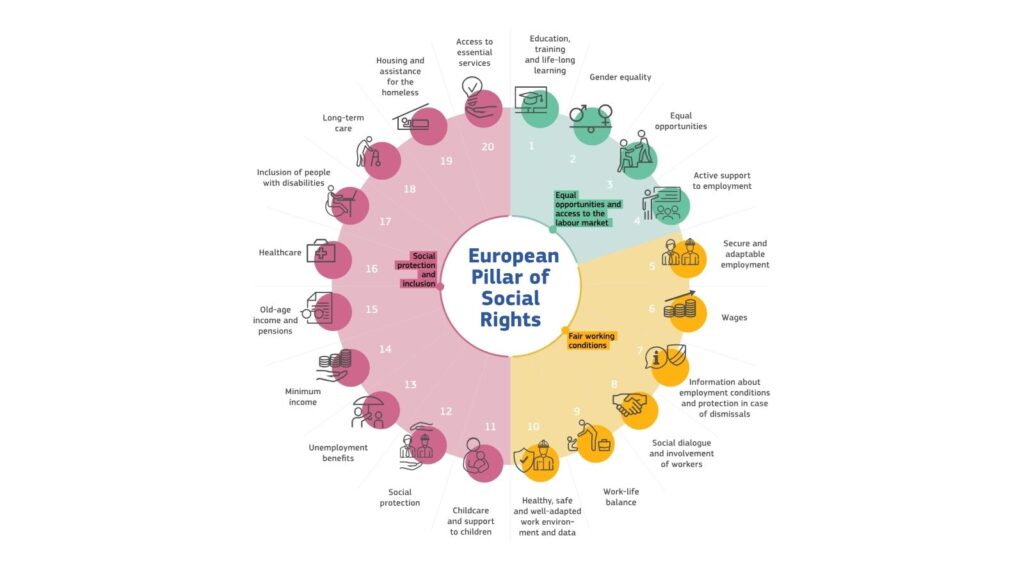
COFACE Families Europe will be watching this initiative closely in the context of the European Pillar of Social Rights renewed action plan, and stands ready to provide input into public consultations, working closely with the European Care Alliance. We call on the European Commission to design this care deal based on key values of family diversity, intergenerational solidarity, human rights, gender equality, and intersectionality with other care-related challenges (working conditions, discrimination, mental health and more). This is crucial to bridge the gap between the EU’s ambition and the real needs of families across the continent.