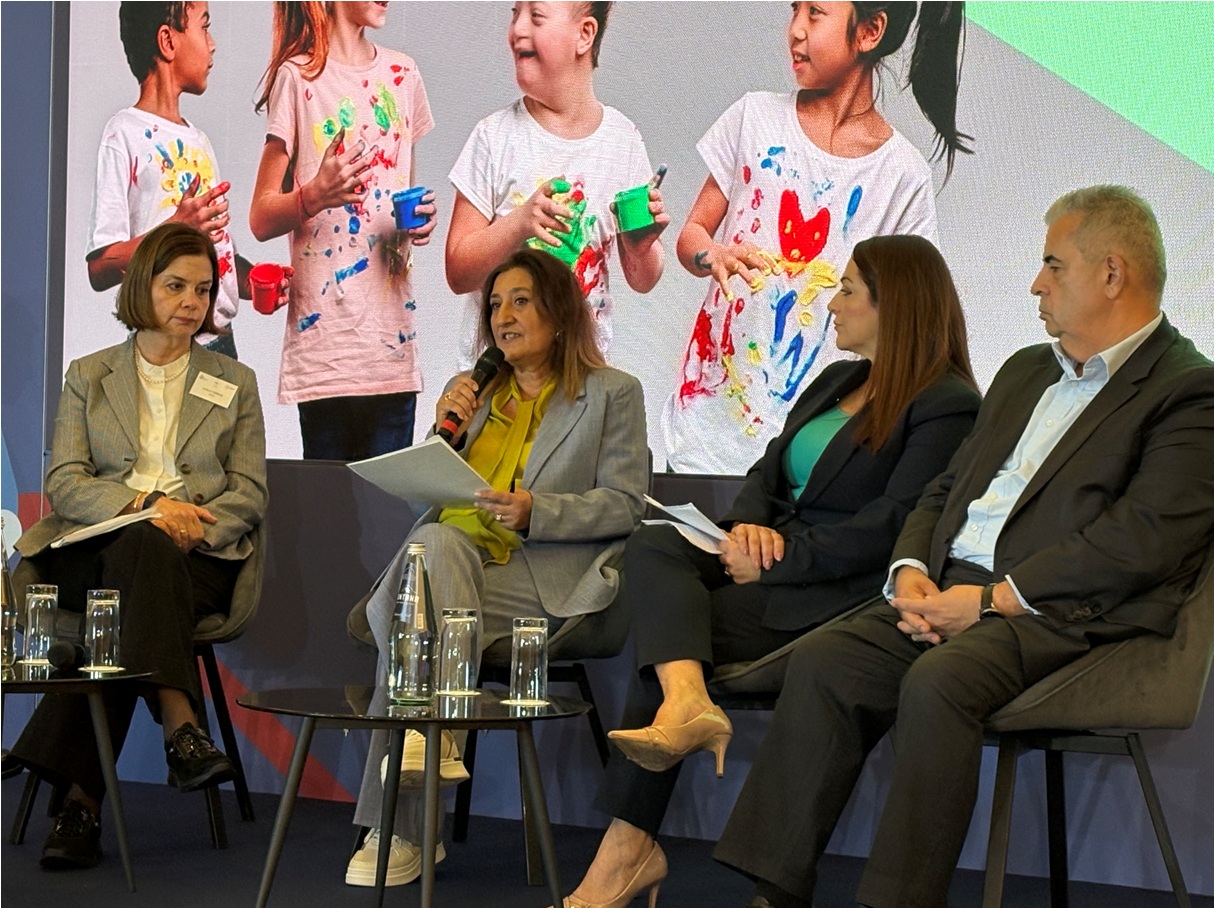
COFACE Families Europe organised a European expert meeting on 18th November in Valletta (Malta) with the support of the Ministry for Social Policy and the Family, the Ministry for Inclusion and the Voluntary Sector, and the National Parents’ Society for Persons with Disabilities in Malta. The meeting brought together experts from 21 European countries of the COFACE network, as well as key partners in academia and public policy, to examine progress and identify remaining gaps in the implementation of the Child Guarantee.
_______________________
The meeting started with a welcome panel debate with Ministers Michael Falzon (Hon. Minister for Social Policy and the Family) and Minister Julia Farrugia (Hon. Minister for Inclusion and the Voluntary Sector), together with civil society representatives Antonia Torrens (COFACE President) and Marchita Mangiafico (Vice-President, NPSPD). They each brought essential perspectives to set the context for the whole meeting. The presence of both Ministers shows the high commitment to ensure that family policies are both effective and fully inclusive, through strong coordination between family and disability policies which reach families who need support.
This was followed by a keynote speaker from Eurofound, Michele Consolini, who presented data on measures taken by governments in the context of the European Child Guarantee, with a specific focus on measures for children with disabilities. As well as highlighting good practice from across the EU, he also made key recommendations for improving monitoring and evaluation of measures for children with disabilities in the context of the European Child Guarantee – highlighting also plans to pilot monitoring frameworks in EU accession countries as well.
Participants then came together to brainstorm about specific challenges and barriers faced by children with disabilities in accessing all essential services, bringing multiple perspectives to the table reflecting the huge diversity of stakeholders present: parents, teachers, doctors, NGOs, public policy-makers and research. After examining the challenges, this then naturally led to spotlighting existing or emerging good practices from a variety of countries including integration of services (from Hungary and Norway), measures to support family carers of children with disabilities (from France and Greece), inclusive education measures (from Belgium and Malta), and finally promoting access to healthcare for children with disabilities (from Portugal and Spain).
Putting children and families at the centre
A central focus of the meeting was the importance of recognising the experiences of children with disabilities and their families when designing and implementing European and national policies. Families often face multiple challenges, including difficulties accessing inclusive education, appropriate care and support services, and balancing employment with caring responsibilities.
With the help of these 100+ experts from 21 countries, COFACE Families Europe has identified several key priorities for improving the implementation of the Child Guarantee for children with disabilities, which will be taken forward in future actions and in the framework of consultations on the Child Guarantee, EU strategy for the rights of persons with disabilities and more:
- Specific recommendations and EU supported mutual learning opportunities for Member States on effective measures to support children with disabilities and their families in accessing their rights under the Child Guarantee across all essential services, with a specific focus on support to single parent families bringing up children with disabilities.
- Family support measures focusing on work-life balance, access to care services, and flexible working arrangements, must be fully inclusive of parents and carers of people with disabilities. This should be an essential part of the assessment of the transposition of the EU Work-life balance directive.
- Any digital transformation of public services, including the proposed Child Guarantee Card, must be accessible, privacy-preserving and non-discriminatory for children with disabilities and their families. Accessible non-digital alternatives should remain available for families.
- Policies developed in the framework of the EU Strategy for the rights of Persons with Disabilities should be fully inclusive of the needs of children with disabilities and their families, recognising that families are the first and main source of care for children with disabilities before they reach adulthood.
- Integrated and interconnected service networks built around single access points, linking leave entitlements, the right to request flexible working arrangements, and local care services. Because family needs are interconnected, public agencies and support systems must actively collaborate to deliver seamless, multi-disciplinary support through coordinated entry points.
Further information: Implementing the European Child Guarantee for Children with Disabilities | COFACE Families Europe