
Background
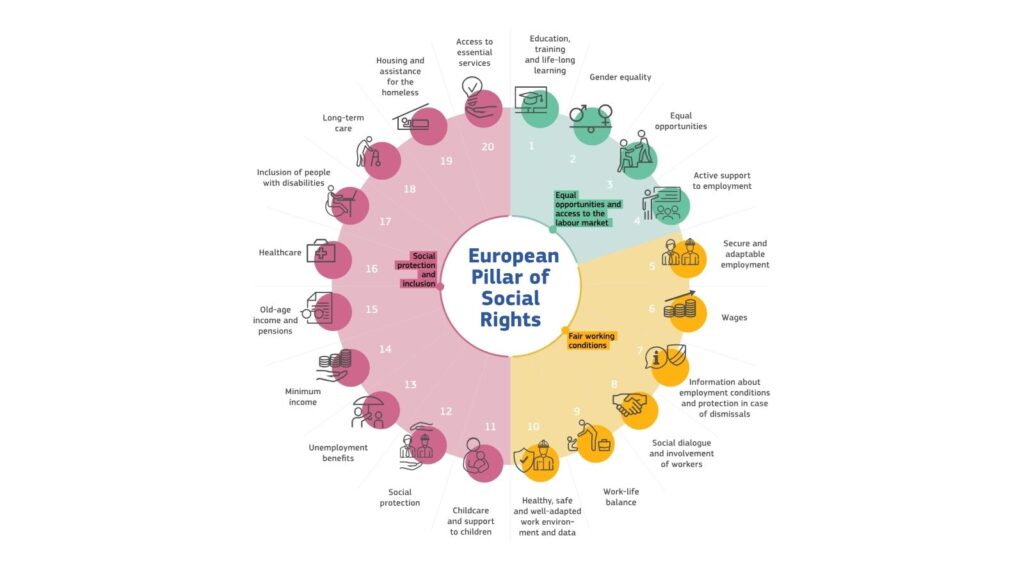
COFACE Families Europe advocates for strong European social funds to be invested in services and support for families. This includes work on ensuring the EU funds are in line with the UN Convention on the Rights of Persons with Disabilities and not funding more institutions, and that the funds are used to boost implementation of the European Pillar of Social Rights Action Plan, and especially the European Child Guarantee, European Care Strategy and European Anti-Poverty Strategy. We have developed this EU Funding Brief to spotlight good practices in the use of the European Social Fund Plus (ESF+) to support families.
This Brief
Across Member States, EU funding is already supporting practical approaches that strengthen families during different life stages: perinatal mental health support, parenting programmes, home visiting, childcare, family therapy, community-based networks and targeted support for families experiencing poverty or exclusion. These initiatives demonstrate an important policy opportunity: EU funding can help shift child and family policy from predominantly crisis-response models towards earlier, preventive and family-centred support. Funds can be used to provide both reactive child protection systems and early, family-centred prevention and resilience. The examples in this EU Funding Brief illustrate how the ESF+ is used to strengthen family wellbeing, with a spotlight on eight countries.
- Bulgaria: home care for independent living of persons with disabilities
- Czechia: supporting families after childbirth
- Estonia: strengthening the child and family support system
- Germany: local parent-support networks
- Ireland: support for young parents
- Italy: childcare and work-family reconciliation
- Latvia: measures to reduce domestic violence
- Poland: supporting transitions to adulthood for youth with disabilities
Next steps
The current European Social Fund Plus (2021-2027) funds family support of different types including early childhood education and care, long-term care, parental support and family centres or hubs in the community. Taken together, the projects in this EU Funding brief demonstrate that “investing in families” does not mean funding one particular type of family programme. It can mean investing across the family life course. As the new generation of EU funds for 2028-2034 are being negotiated at EU level, and the new investment priorities are in discussion at national level, these examples serve as inspiration for continued investments in families post-2027.